

One can hardly go a week without reading a LinkedIn post or see yet another news / trade publication article announcing Gigawatts of yet more data centers to be built within the next few years. Not to be outdone, there are an equal number of articles lamenting the lack of energy, grid constraints, and the fevered push to both investing in local/ regional grid transmission and distribution projects as well as commitments to Bring Your Own Power (BYOP).
Consider this a high-level overview of the pros, cons, and potential pitfalls of deploying a BYOP project. Your specific site (s) may have a host of other issues to content with. Do consider hiring trained professionals for the civil works and by all means engage your CSO, CMO, and PR team well in advance. The Ugly will engage you early, often, and very loudly! Your stock may take a beating in the process.
The Good, in no particular order.
Speed to deployment, at least within certain geographies where both the grid operators along with the State and Local governments are favorably inclined towards; large real estate developments, new CO2, NOx, SOx emissions, new renewable energy resources (and associated visual / noise / wildlife impairments, noise considerations, downwind emissions and air quality, down stream water runoff issues, light pollution, etc. Many grid operators are keen to work alongside of energy developers who would consider a grid interconnection as part of the project, rather than a pure island, as a temporary supplier of excess energy and grid firming services during the early phases of the data center build out. This could help accelerate your project approval process.
Multiple energy sources, at least there is the potential to develop several on and/or near site sources, again depending upon the location. For many natural gas will the primary raw energy source with turbines, recips, and even fuel cells for generation. However there is often the potential to integrate some amount of wind, solar, geothermal, even hydro to augment the primary energy source. For those who do decide to include a grid connection these alternative energy sources may be dispatched under favorable market conditions. Note, it is highly unlikely that your GW-scale data center site will be anywhere near large enough in footprint or close enough to a hydro source to generate 50% of your projects energy demand. The wild-card would be geothermal provided you are considering the Salton Sea area but then that is California where permitting and development costs will crush both your financial and timeline.
SMRs are not viably on the table within the next five years. Certainly worthy of future consideration. Once can design ‘parking spots’ inside the fence should they become available sooner.
Reduced / stable energy prices, perhaps the single biggest reason to invest all the upfront time, money, and human energy into a BYOP project are the benefits of very well controlled financial models for current and future costs of energy. If you can manage the CAPEX the OPEX, under most foreseeable models looks very good. Especially if you are able to layer-in a significant portion of renewable energy sources such as wind with low costs of energy. Yes, there are always some amount of seasonable and geopolitical risks associated with natural gas but appreciably less so over time than the constant onwards and upwards pacing we see globally on electricity. Sadly, in many areas within the US our PUCs (public utility commissions) are little more than well-healed political appointees who rubber stamp every single rate increase that comes across their desks. (No comment on the California PUC)
Improved reliability / availability, this may run a bit counter to our traditional way of thinking about calculating ‘uptime’ and availability but bear with me as I walk you through this topic.
For starters, you don’t need to separate electrical utility feeds, from two distinctly different geographic directions to ensure maximum uptime for your GW-class data center. Quite frankly, you will be hard pressed to find a site with two such feeds anywhere in the country.
Why? Well once you start exploring the root-causes for most grid interruptions they come down to transmission (ice storms, wind events, terrorists / sabotage as-in shooting out insulators) and distribution with CHP (car hit pole), car/truck hit box/xfrmr, flooding, ice storm, weather, earthquake, etc. Oh and let’s not forget SCADA cyber attacks.
A well designed BYOP installation solves almost every one of those issues. For starters, with your own on-site MV or HV generation system you have the luxury of other utilizing short-distance overhead transmission on dedicated towers / roadways, or better yet your own network of underground culverts. Just like that you have eliminated perhaps 90% of all potential outages. Further, being island-mode or self-directed grid interconnected your system will operate out-of-band with other utility communications systems eliminating the threat of cyber terrorism. So too the errant lone gunman or errant private pilot.
Higher energy and resource efficiency, the basic maths behind energy conversion, transmission, and distribution are extremely more favorable for compact systems. As evidenced by nuclear powered submarines, aircraft carriers, and even the much maligned steel mill the closer the energy generation and conversion take place to the point-of-load, the better.
For the GW-class BYOP data center the first improvement in overall system energy efficiency comes from the elimination of tens to hundreds of miles of transmission losses. Often estimated at 7 to 10 percent. This equates to a significant annual OPEX improvement even when compared to purchasing natural gas derived electricity from a utility source, at cost, from a generation site even 50 miles away.
Depending upon your generation source / strategy and any renewable energy integration your site will likely comprise a dedicated MV network. As noted above likely all or a significant portion underground and transmitting over very short distances, perhaps a few miles at most. The need for multiple substations, down/up transformers and/or power quality systems that bring additional conversion losses can for the most part be eliminated. Thereby adding another 5 to 10 percent net system energy improvement.
Moving further downstream, as we enter the data center building broader envelope including the e-houses (electricity) and c-houses (cooling) we find that a direct MV AC feed can save us significantly in first cost CAPEX with significantly smaller AC wire runs (potentially solid copper buss bars in certain applications), minimizing the need for MV/LV transformers (yes, some will still be required for certain electrical loads), and from a ESS/BESS perspective operating at MV voltages improves energy density while improving ability to provide seamless, rapid integration along with transient / outage protection.
E-house improvements, these will be realized as the electrical infrastructure migrates to either MV AC distribution all the way to the rack/cabinet/cluster (with perhaps a MV/MV power quality module a la a modified UPS inside the e-house or an 800 V DC power system. Here we are seeing some very early developments for skidded/enclosed MV to 800 V DC in the 500kW to 4 MW blocks with energy efficiency approaching 98 percent.
These 800V power systems, with closely-coupled liquid cooling and advanced power electronics will reduce the data center’s overall footprint, improve the net energy efficiency enabling more of the prime energy source (natural gas, wind, hydro, geothermal, nuclear) to power the IT infrastructure. Savings not typically captured in classic PUE calculations. For more on this check out what is being developed by the hydrogen / renewable energy infrastructure community with their electrolyzer – https://eh2.com.
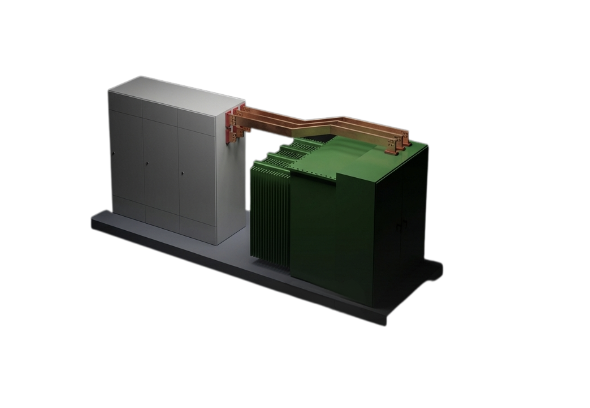
C-house and chiller yard improvements are coming to the GW-scale data center community now. Although most cooling systems are built for a 480 VAC source, hence the need for a small substation on-premise for the BYOP data center, there are systems today that are able to operate on either 480 VAC or 800 V DC today. Systems based on supercritical CO2 instead of conventional with high PFAS and incorporating high-efficiency, extremely dense chillers that significantly reduce the data center’s footprint while improving heat rejection efficiency regardless of the local wind conditions. Again, energy efficiency savings typically not realized with conventional systems, Take a look at what Karman Industries is doing with their HPUs. https://karmanindustries.com
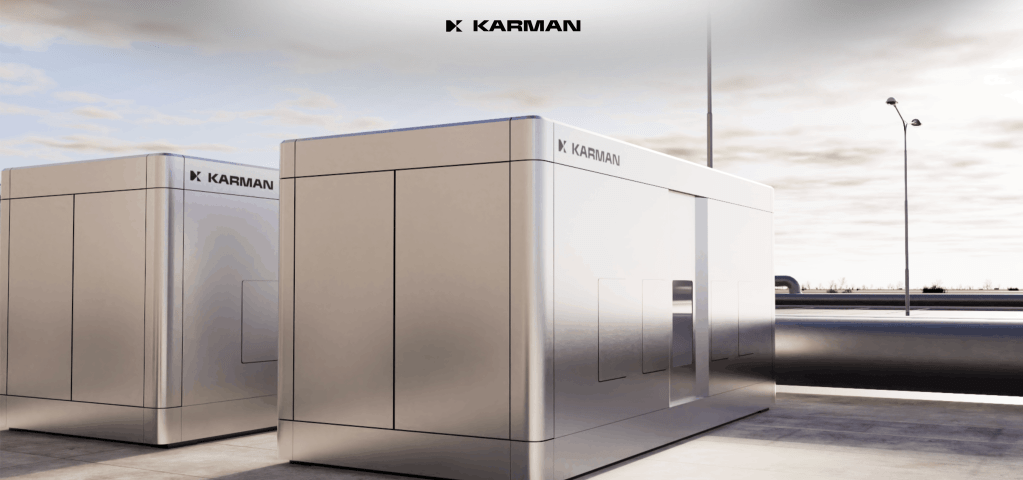
Innovation and energy reuse effectiveness (ERE) can be designed into the BYOP power plant, cooling, and nearby community ecosystems. Certainly when turbines or reciprocating generators are concerned there is some medium-grade waste heat available for regeneration (see the above Karman HPUs as an example) or shared with industrial processes, water reclamation / purification, green houses, etc. These concepts are far easier to adopt during the greenfield design phase than post development or as a bolt-on to an existing facility. Plus, when properly documented with a good PR story can help address the Bad and the Ugly.
The Bad, a quick look
Increased scrutiny, as we will see with The Ugly, as soon as you hinted at a BYOP project all sorts of alarms went off both inside and outside your organization. Let’s start with your CSO (chief sustainability officer) amongst many others who will demand a seat at the table. Once you become a true self-generated source of CO2 the societal, PR, reporting, governance implications multiply almost exponentially. So too the public facing image within the local community as well as Wall Street.
Of course there are numerous ways to improve the optics to sell the story including the previously mentioned renewable energy components, ESS/BESS, grid services, nearby community development projects as offsets, and when properly documented the net energy efficiency story combined with; hey, not only didn’t we take any of your precious power away from you but we replaced it with a cleaner / greener energy source.
Don’t forget the great PR stories associated with energy reuse, water reclamation, good neighbor power / heat sharing, etc.
Permitting hurdles, these only get more difficult from greatly expanded scope to increased number of AHJs, Here your advance research team, government liaisons, and utility / NERC/FERC outreach teams must have done their homework. Some ISOs (independent system operators) are more accommodating than others. And some States have onerous legislation making new energy sources almost impossible to develop if not outrageously expensive for all but the currently embedded utilities.
Supply chain & logistics, well if it wasn’t hard enough to find 100 MW of new collocation white-space within the next 12-months the timetable for BYOP makes winning the Lottery easy.
Your specific BYOP will have numerous Gantt charts, project managers (PMs), multiple engineering firms, government and utility PMs, and all sorts of purchasing, contractor staff with associated PMs. Sadly, the current timetables for most ‘generation’ equipment runs in the years, not months. Worse, you do run the risk of obtaining an early ‘approval’, more like a nod, for your prime power plant of choice (turbine X, jet engine Y, or recip Z) only to find than once purchased someone from the Ugly-side of the equation convinced the AHJs to eliminate that option, add significantly more pollution controls, or otherwise limit the commercial viability of your intended design.
Wild Idea – there is an oversupply of made-in-China (and other locations) solar PV panels and relatively low cost BESS that one could conceivably accelerated the initial phases (s) of the BYOP data center by running on solar and/or wind alone, combined with periodic diesel or natural gas generators. Then as the project progresses slowly integrate the renewable systems into the overall BYOP power plant. Return the rented generators to the supplier. Perhaps keep a few on-site with some stored fuel in case of emergency.
Infrastructure -other, quite often the very same locations that are crying for development and are eager to accept your GW-scale, BYOP data center project are the ones most lacking in civil infrastructure.Roads, hospitals, schools, a proper airport, water and water treatment may all require significant investments. This isn’t insurmountable, just look at how quickly areas like Quincy, WA and Prineville, OR developed as data centers became almost synonymous with their communities. But you had better plan accordingly from day-one. Do include your CSO and PR teams as once again the stories to be told for community development may swing public opinion strongly in your favor.
People, unlike the old adage about roads and Rome, not all (if any) communities suitable for hosting a GW-scale, BYOP data center will have the skilled trades for 1, site and civil works 2, construction and 3, run the facilities (power plant and data center) once they are operational. Long-term planning must begin in earnest once the project is green lighted to ensure sufficient temporary staffing to address the early phases of development. In concert with those staffing / training activities you will need to overlay the broader community development and lean heavily on your recruiting efforts to build-out your longer duration, full-time staff.
Pro-tip, many of our Armed Services personnel came from ‘small town USA’ or want to retire there and when they exit the military they bring all sorts of training, skills, and can-do experience that are hard to beat. Go Navy!
The Ugly
Timing is everything. Thank you The Guardian for the following.
Amid an unprecedented energy crisis and the rapid buildout of artificial intelligence infrastructure, progressive lawmakers have unveiled a new policy to place a moratorium on the construction of AI datacenters.
“Despite the extraordinary importance of this issue and its impact on every man, woman and child in this country, AI has received far too little serious discussion here in our nation’s capital,” Sanders told reporters on Wednesday. “I fear that Congress is totally unprepared for the magnitude of the changes that are already taking place.”
The policy, announced by Bernie Sanders, an independent senator from Vermont, and Alexandria Ocasio-Cortez, a New York Democratic representative, aims to ensure the AI boom protects the environment and communities, and benefits workers instead of harming them. A temporary ban, the lawmakers say, would give the US government time to create strong federal safeguards for AI, which is “affecting everything from our economy and wellbeing to our democracy, warfare and our kids’ education”.
Let’s face it, currently data centers are very much the evil smokestack industry of choice to rally against at local town halls, media, and now within the halls of Congress. I am not suggesting all who espouse such beliefs are 100 percent wrong. But we certainly must be aware that not only are they out there but their voices are striking a chord.
The time is now to get in front of this Ugly mood before it becomes too pervasive and wrapped around an untenable, anti-business, anti-data center agenda.
For those considering a BYOP data center project I strongly encourage you to get your full story prepared and vetted before you get too far down the road. Otherwise you will be the proverbial windmill but this time Don Quixote will be riding an M1A2 Abrams tank.
 Pouchet Advisory Services LLC
Leave a comment